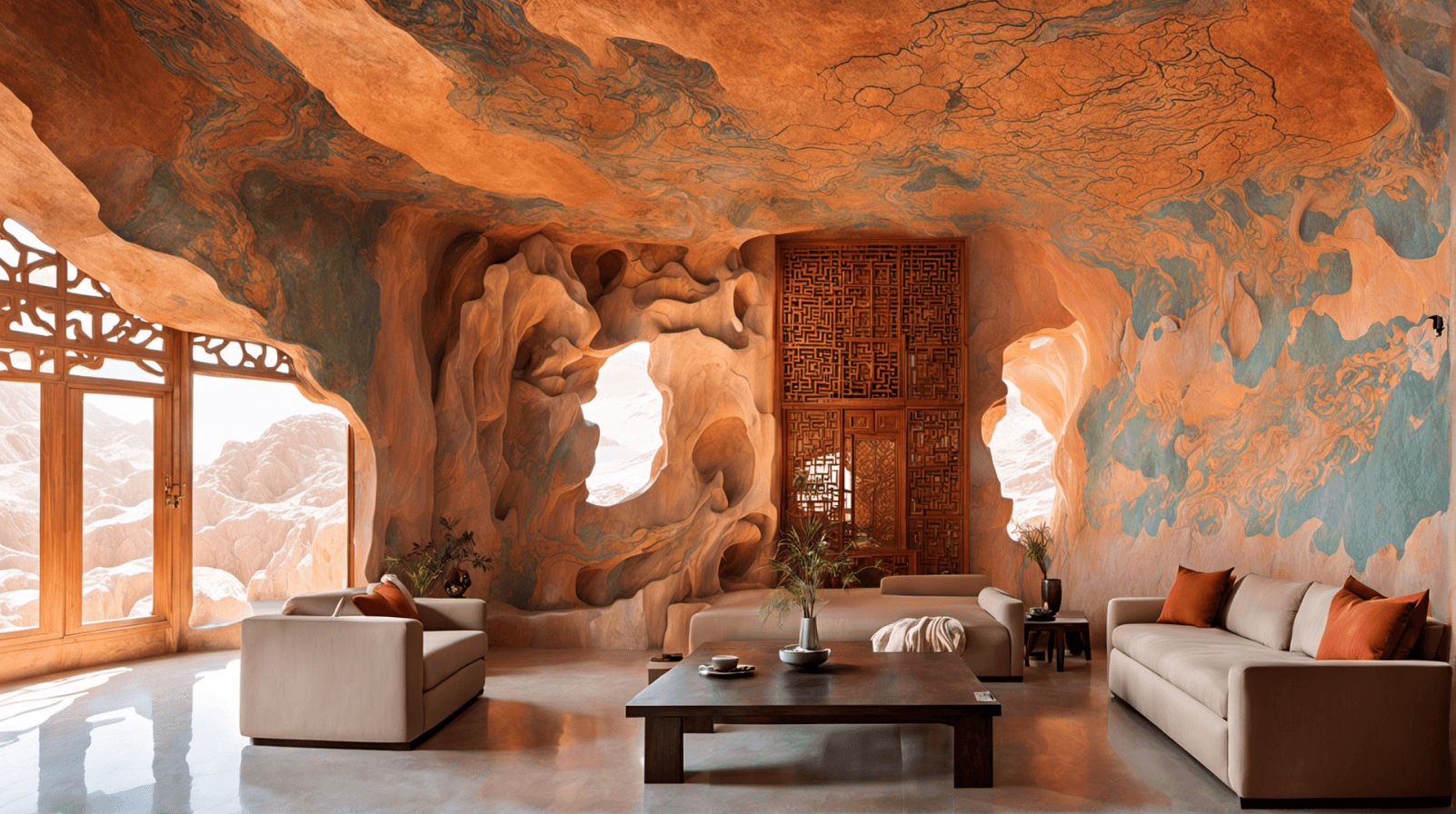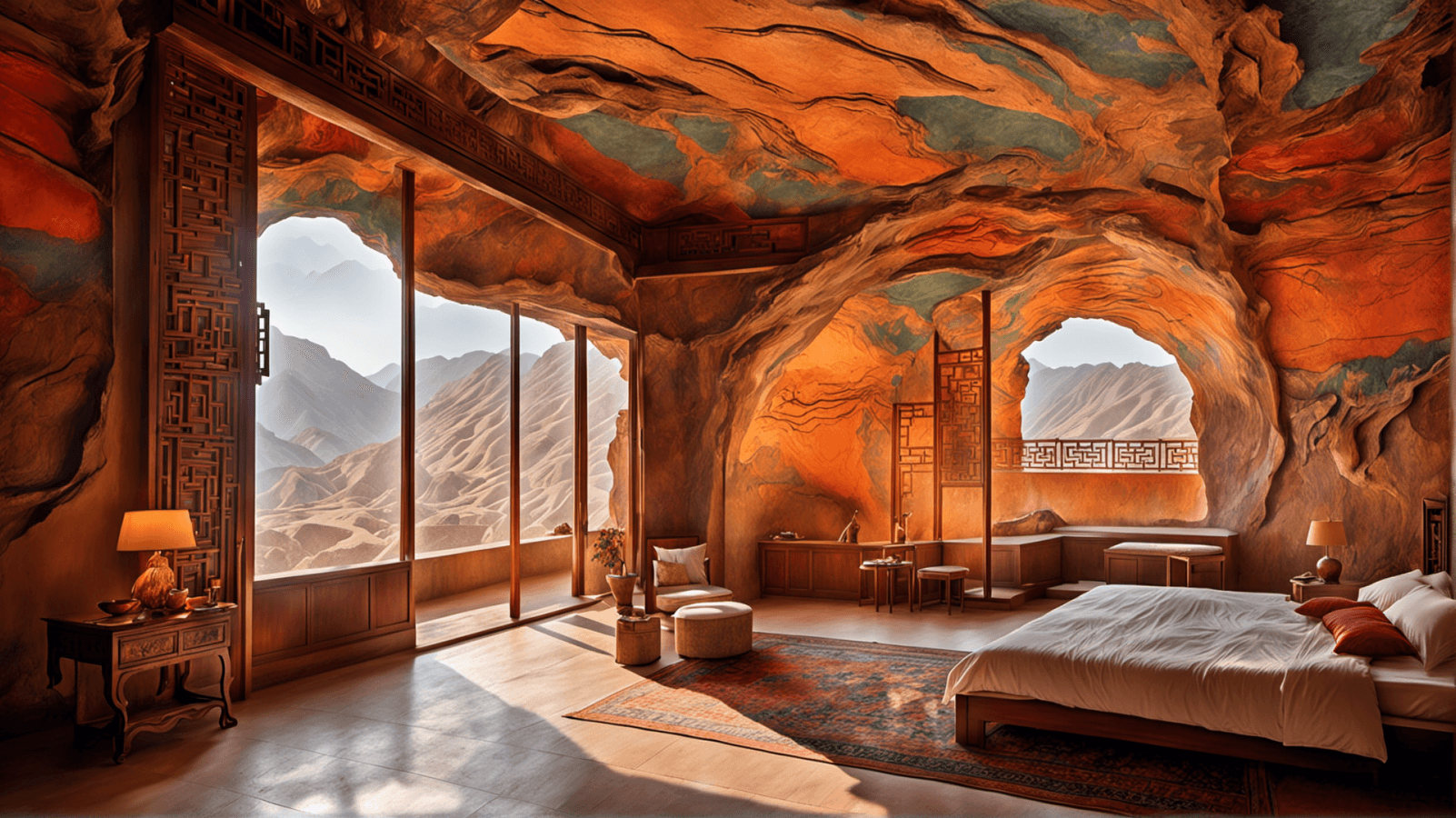
Reimagine Dunhuang
An AI-assisted spatial design workflow for a Dunhuang collective dwelling, combining generative imaging, 3D reconstruction, and VR to connect cultural heritage with contemporary living.
Project Overview
Reimagine Dunhuang proposes a collective dwelling that translates local heritage into contemporary living through an AI-assisted design pipeline. The goal is to carry the atmosphere of vernacular architecture and the Mogao Grottoes (敦煌石窟) into modern spatial layouts without losing cultural character.
Dunhuang sits on the edge of the Gobi Desert, known for carved cave temples, Buddhist sculpture, and rammed-earth building traditions. This project tests how AI tooling can speed up early design exploration while staying grounded in place-specific materials and forms.
AI-Assisted Spatial Design
A full pipeline from material study to immersive VR, showing how generative tools and Gaussian splats support faster iteration and clearer stakeholder feedback.
Impact & Innovation
The workflow pairs generative AI image synthesis with Gaussian splats VR scenes to unlock faster concept cycles and earlier immersive review , while protecting local cultural fidelity .
The Challenge
Architectural work is expensive to iterate: high-fidelity models, textures, and prototypes take time and budget, which makes early exploration difficult. That tension often pushes meaningful testing and refinement too late in the process.
Clients respond best to finished renders, while teams still rely on sketches, drawings, and massing. The gap makes early ideas harder to communicate.
Traditional Workflow Friction
AI-Assisted Gains
The AI-Assisted Design Workflow
Five concise stages take the project from cultural research to immersive review, with the designer guiding every decision.
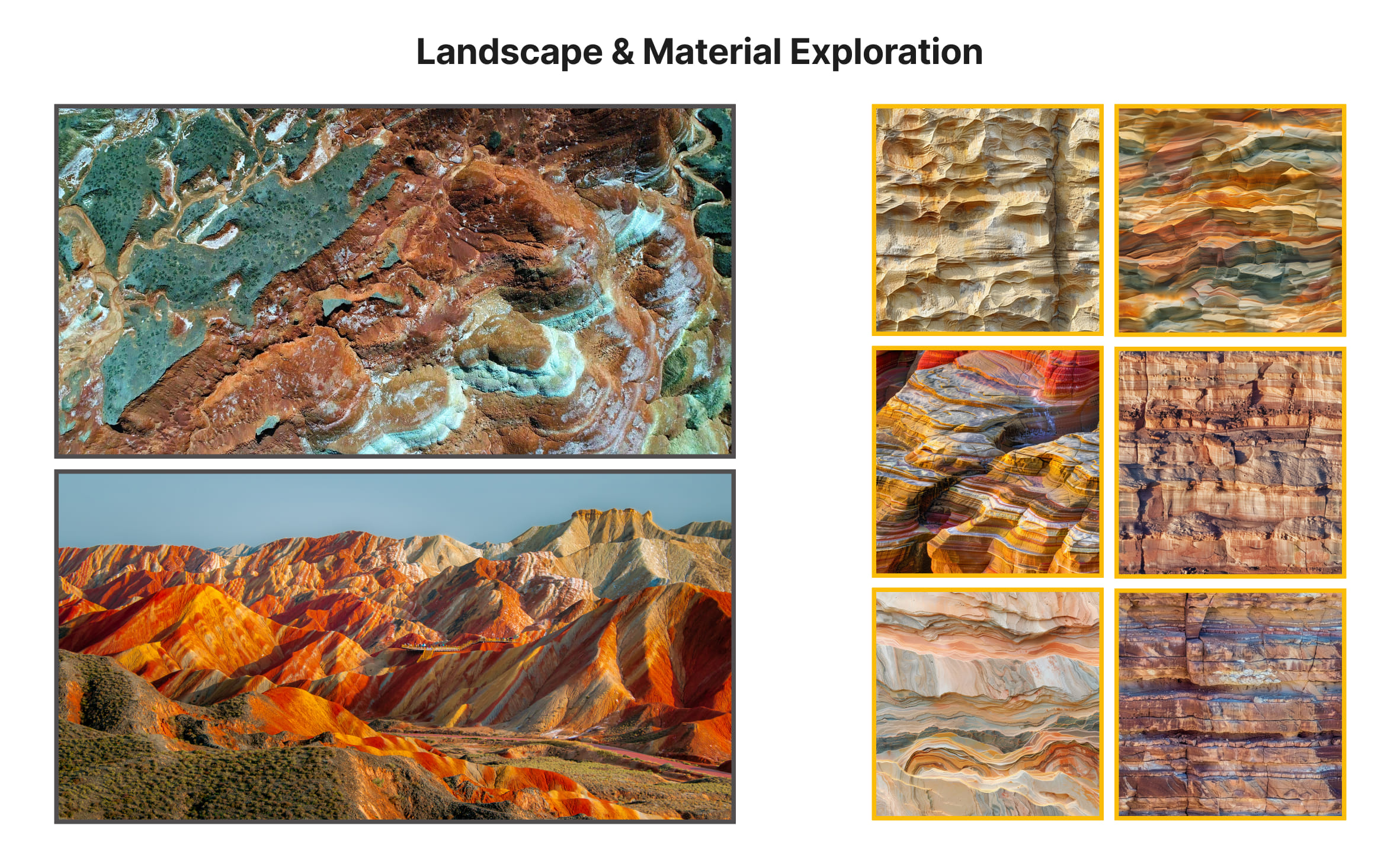
Material & Typological Research
Capture local context and use AI to analyze materials and cave spatial logic.
Inputs
- Material photos
- Cave studies
Tools
- Stable Diffusion
- Prompt sets
Outputs
- Visual studies
- Typology cues
Texture & Construction Exploration
Build texture families from landscape cues and sand-print constraints.
Inputs
- Desert textures
- Erosion patterns
Tools
- Stable Diffusion
- Image control
Outputs
- Texture tiles
- Material sets
Typology Reimagination
Assemble modular “chunk” elements and iterate with AI-guided visuals.
Inputs
- Massing models
- Typology rules
Tools
- Blender
- AI renders
Outputs
- Section options
- Module library
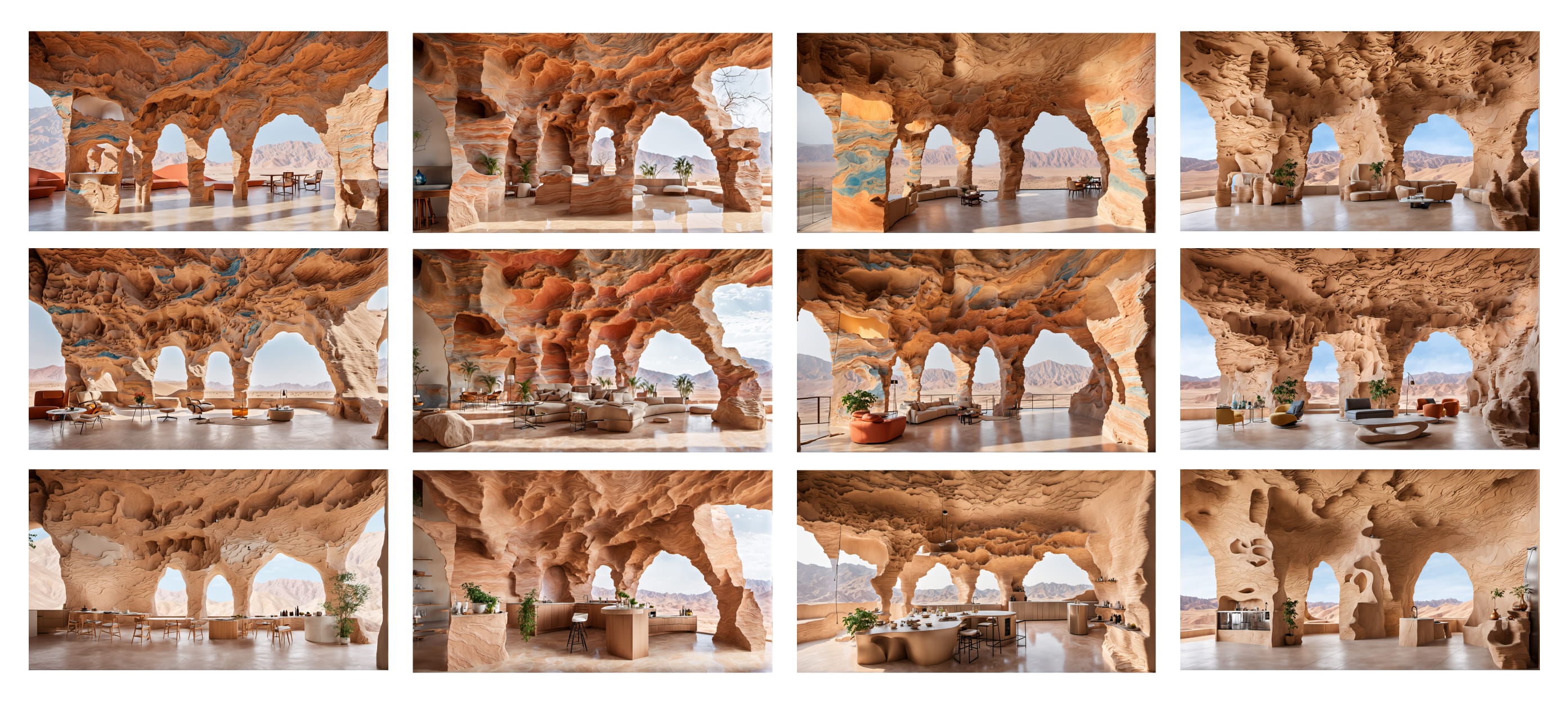
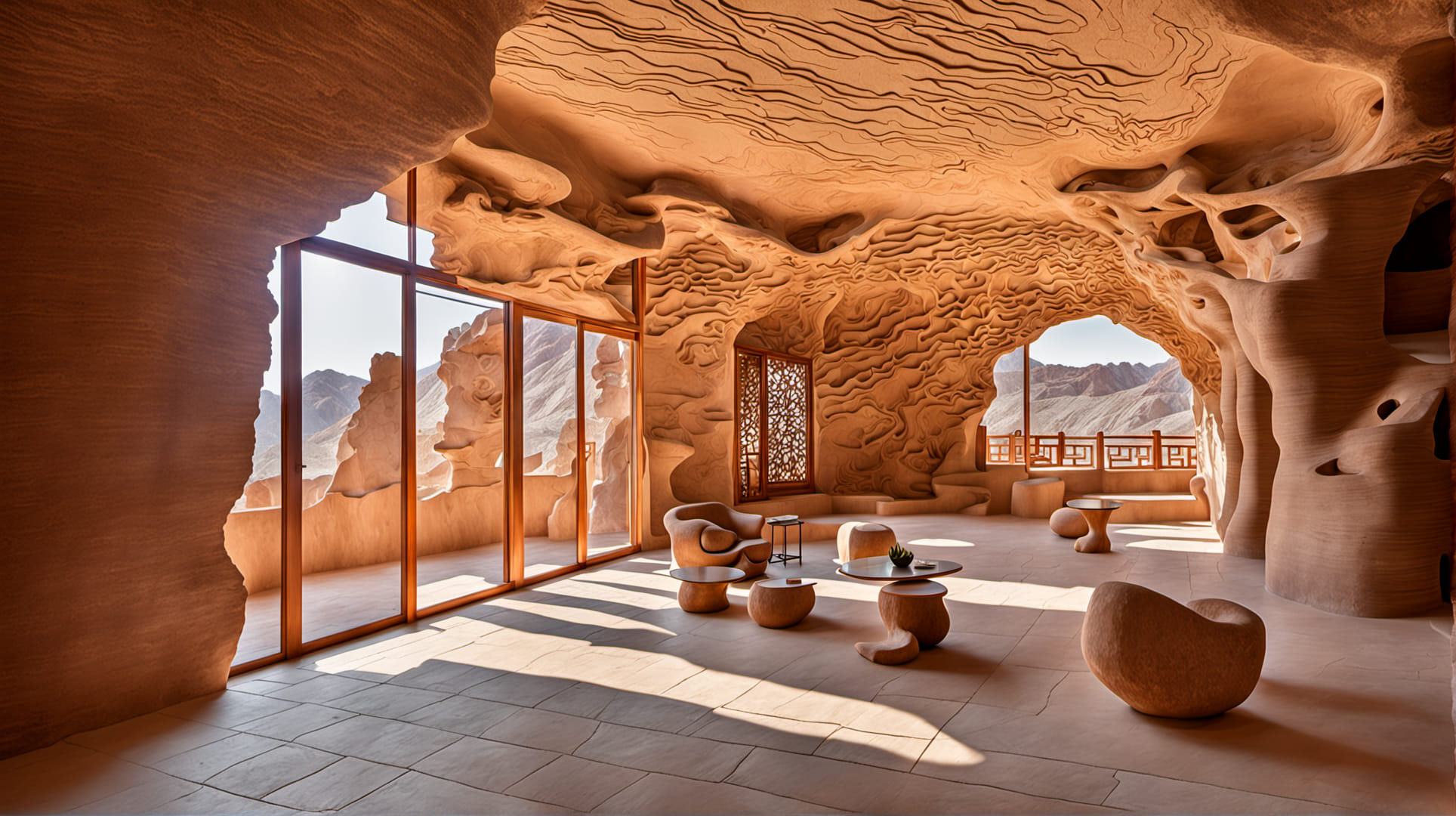
Interior Design & Rendering
Prompted variations for living, lobby, and shared spaces.
Inputs
- Program needs
- Material sets
Tools
- Stable Diffusion
- Control images
Outputs
- Interior sets
- Render series
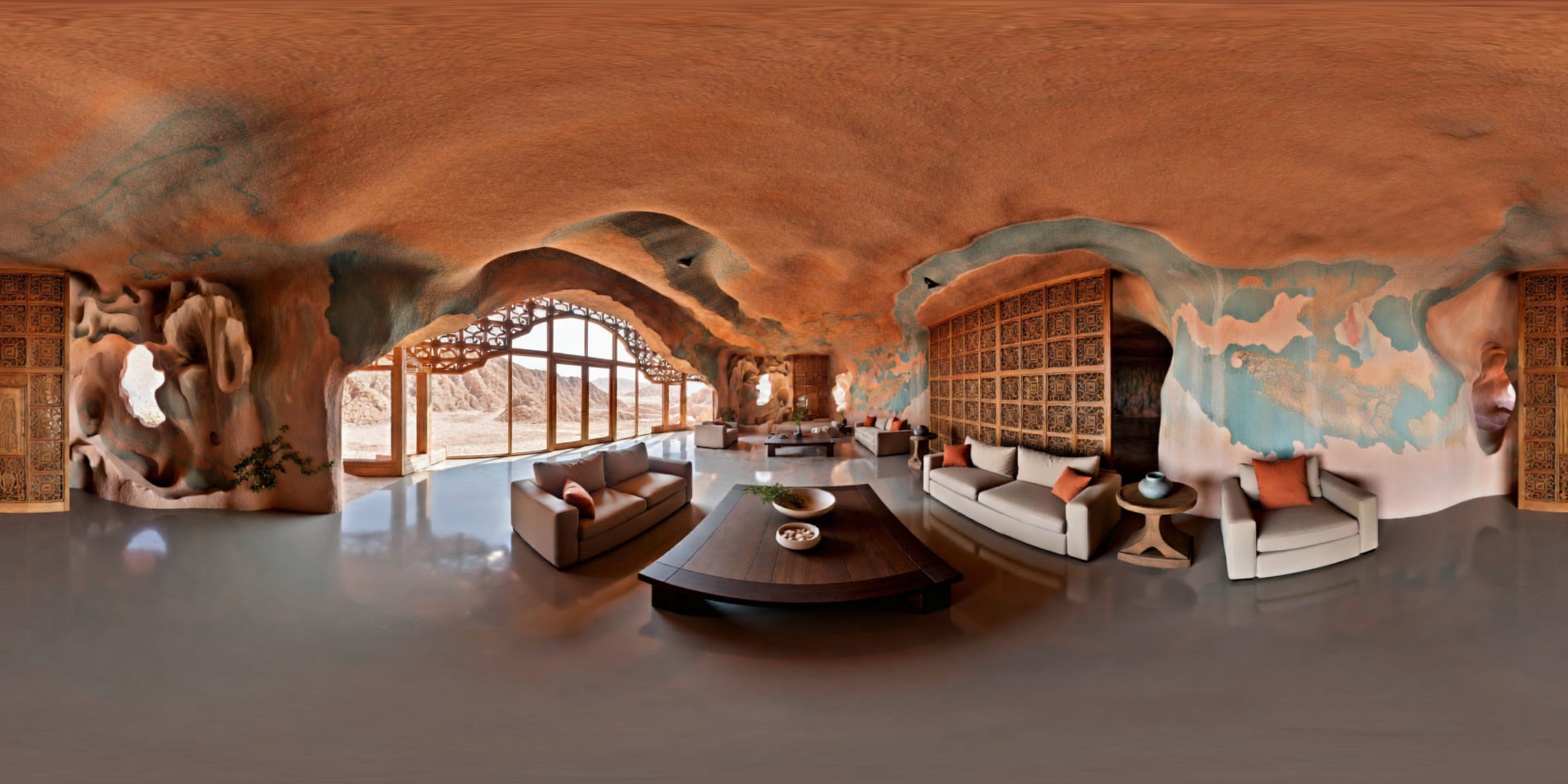
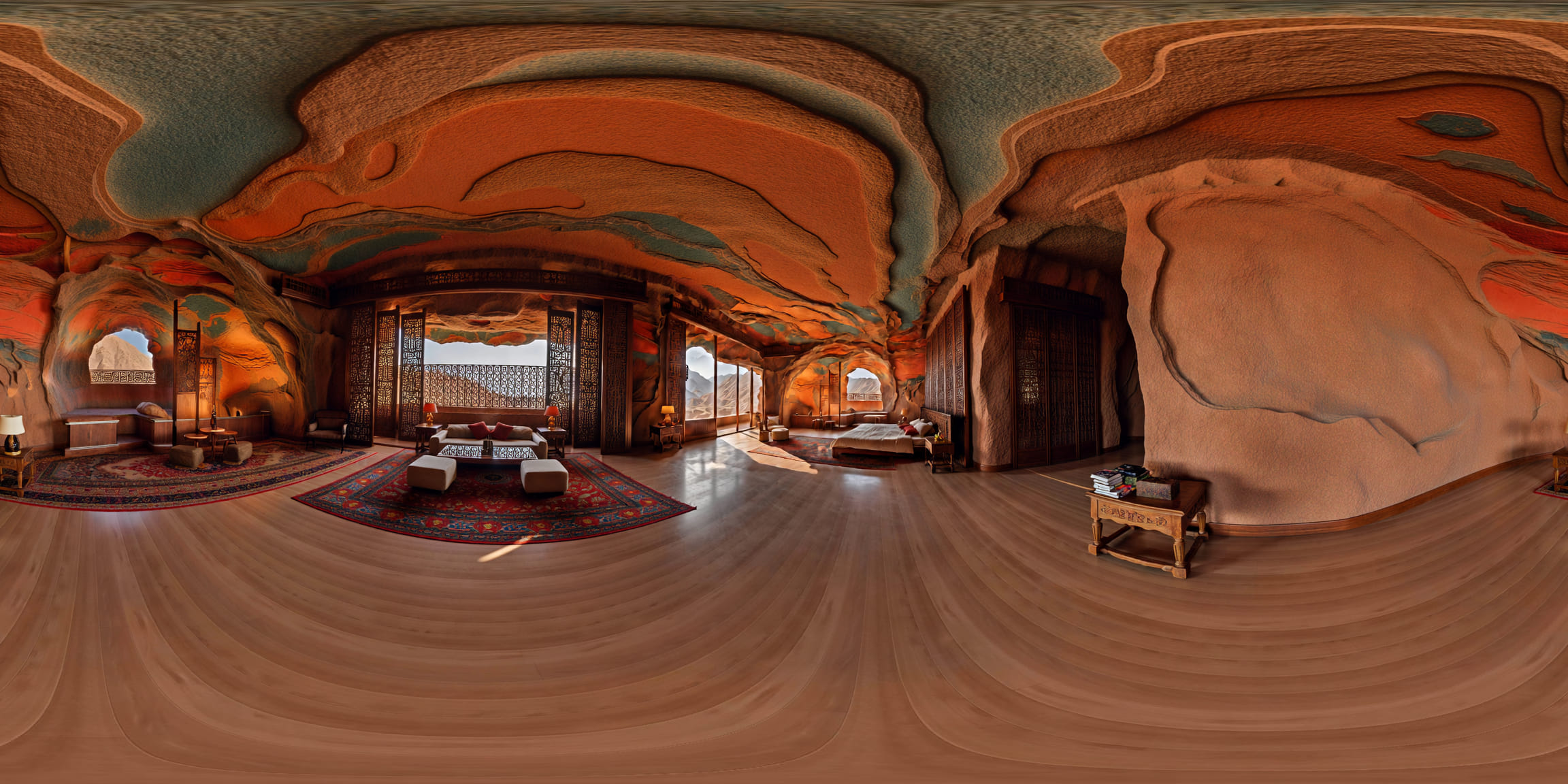
Panoramic Expansion & Gaussian Splat VR
Turn 2D interiors into navigable 3D scenes for critique and feedback.
Inputs
- Selected renders
- 360 expansion
Tools
- World Labs Marble
- Gaussian splat
Outputs
- VR walk-through
- Review loop
Design Outcomes
The workflow yields a complete artifact set that balances heritage references with contemporary spatial needs.
Architectural Elements
- • Material and texture tiles derived from local geology
- • Reinterpreted grotto geometries as adaptable typologies
- • Modular architectural components for flexible layout
- • Site-responsive forms aligned with traditional proportions
Spatial Experiences
- • Private living units with cave-inspired spatial character
- • Lobby zones that support informal social exchange
- • Shared spaces balancing private and collective life
- • 360° panoramas and navigable VR environments
Project Gallery